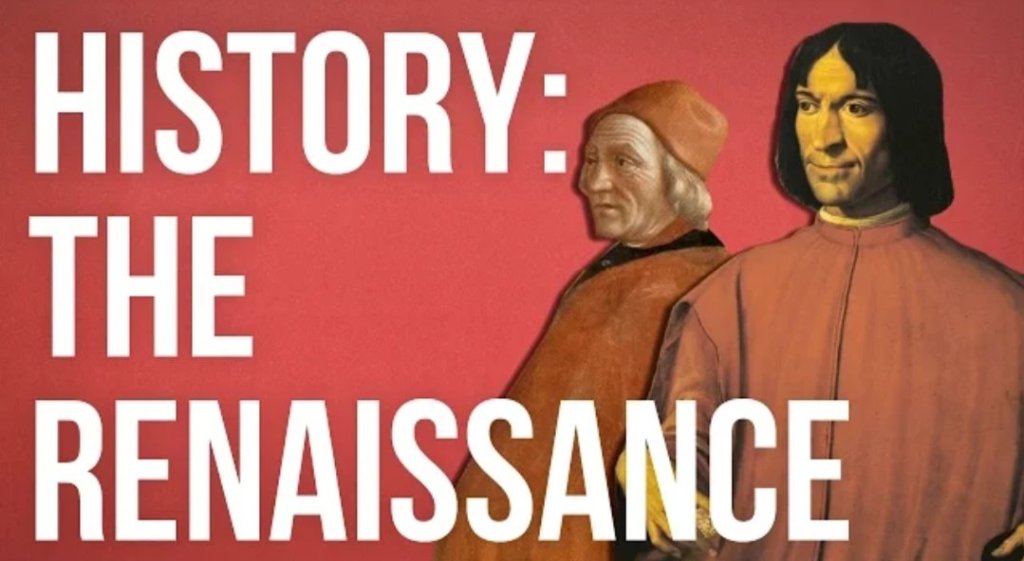
The phenomenon known as the Renaissance is one of the standard stops on any tour through the history of Western culture.
It encompasses a roughly 300 year period in Europe, where architects, poets and philosophers reconnected with the style and ambitions of ancient Greek and Roman civilization. The reasons for studyingthe Renaissance nowadays are often left a bit unclear. To the high-minded andrespectful the rationale may seem utterly obvious, or to the more impatient or technologically focused the exercise can equally will appear a complete waste of time.
We believe that the main reason to study history is to rescue certain good, provocative and inspiring ideas that have been lost in the past, in order to put them to use in relation to the dilemmas and problems of our own times. Our tour of the Renaissance whileseemingly about some old long dead guys will hence really be about us. Florence, Italy, 1469 A 20 year-old nobleman from one of the grandest families of Florence, Lorenzo de’ Medici takes over the family business: The Medici Bank, that’s been going since 1397 and is the most respected financial institution in Europe with flourishingbranches in Florence, Venice, Rome and Geneva.
Lorenzo like his uncles and his fatherbefore him has a great gift for business. During his lifetime, the bank will open new outposts in Basel, Bruges, Avignon, Pisa, and lend significant sums of money to royal courts, aristocrats and entrepreneurs. Lorenzo and his family are typical ofthe Florentine upper classes of his age in honoring the business of making money without any of the traditional suspicion of trade found in most Christian societies. But not only are Medicies interested in making money they are also extremely ambitious abouthow to spend money. They believe that the express purpose of what we would now call philanthropy is to promote beauty, truth and wisdom inthe world.
Lorenzo de Medici’s grandfather hadstarted the collection of books that became known as The Medici Library and Lorenzo now expanded it decisively with his researchers scouring Europe’smonasteries, courts and libraries for lost or overlooked text from antiquity. Lorenzo was a patron of manyphilosophers including Marsilio Ficino, Poliziano and Giovanni Pico della Mirandola. Under his guidance, these philosophers undertook pioneering researches into Greek philosophy. They absorb the ideas of Epicurus, Cicero and Aristotle and try to harmonize Plato’s theories with Christianity.
Lorenzo is perhaps best known as a patron of art. His court artists includedVerrocchio, Leonardo, Botticelli, Ghirlandaio and Michelangelo. The patronage was extremely intimate and involved. Michelangelo lived with Lorenzo and his family for five years, dining at his table and participating indiscussions led by Marsilio Ficino. Although the Medici were quite rich bymodern standards, their fortune was a relatively moderate one. Across four crucial decades, from the 1430s to the 1470s, it’s estimated that the Medici familyspent the equivalent of around half a billion US dollars on intellectualpatronage, architecture and art works, which is a huge sum by comparison with average incomes but it’s not very substantial by comparison with thewealth of the richest people today.
The Medici family resources would be roughly those of Rosa Cafferata whose wealth from a fishery business in Peru isaround 1.5 billion US dollars. She is at present 1200th richest person in the world. Lorenzo would seem economicallyunimpressive next to Giorgio Armani, 8.5 billion, and a nonentity next Bill Gates,79 billion. Money was important to what Lorenzo and his family achieved no doubt. So in that respect the world isamazingly well placed to continue in his footsteps. There’s no shortage of money to do thesorts of things he did. But what’s holding us back today is a shortage of vision.
For the price of this yacht, Lorenzo fueled the Renaissance for 30 years. The secret to the Medici’s impact was that they didn’t see themselves as there simply to hand over the cash to allowartists, architects and scholars to do whatever they wanted. The Medicies had avision, a mission for the arts and for philosophy, and we’re extremely directand didactic and putting it forward usefully so. Guided by his philosopherfriend Ficino, Lorenzo thought of art the kind of education. Under his patronage, artists were therefore asked to illustrate key philosophical truthsabout say the importance of kindness and compassion.
They promoted serenity andglorified the best qualities of the state and of good leadership. The Renaissance would never be remembered if its leading members that simply made piles of cash. No one cares about that for any lengthof time. The real source of its glory was the imagination and intelligence with which its great bankers and finances set about spending their money. Monastery of Fulda, Germany, January 1417 An Italian scholar and humanist, Poggio Bra violinist is on a tour of Germany and Switzerland, looking for lost Greek and Roman manuscripts.
He is spending a few weeks in aBenedictine Monastery, hunting around the dusty shelves of its great library, when in a forgotten nook, he makes one of the great discoveries of the whole Renaissance. He comes across what still remains the only surviving manuscriptsLucretius, de Rerum Natura, On The Nature of Things which gives us the most complete account we possess of the philosophy and worldview of the Greekphilosopher Epicurus.
Bracciolini and his circle are astonished. Epicurus has hugely valuable ideas about the human passions, happiness, religion, communal life and science. This is only the highlight of a careerspent rescuing lost manuscripts. In time, Bracciolini is to go on to discover key text by Cicero, Quintillion and Vitruvius. When he couldn’t by text, he wasn’t averse to a little skulduggery to get what he wanted. He famously bribed a monk to abstract a copy of Livy, the Roman historian from the library of Hersfeld Abbey in Germany. Bracciolini was hugelyinterested in classical texts but he was not a scholar as we would understand the term, that is someone who wants to investigate the past for its own sake and respects the inherent nobilty of old books.
The Renaissance attitude to history and philosophy was very different. Its intellectual leaders took a relentlessly practical view of things. They wanted first and foremost to run their societies successfully, to make their people wise and to build magnificent cities. The Epicurean philosophy Bra violinist dog up with its emphasis on friendship, simplicity and the acceptance of limitations wasn’t exciting to him because it was old, but because its wisdom was still needed. He wasn’t looking for ancient idea so he could fill in missing details about how the past used to be perhaps in order to gain a professorship in a university, Bra violinist was urgently searching for help in creating better ways of thinking for the present.
Central Florence, 1484 Michelozzo di Bartolomeo one of Cosimo de Medici favorite architects completes the family home: The Palazzo Medici, just near the city’snew cathedral. Michelozzo has studied Roman antiquities closely and the building’s tripartite elevation beautifully expresses the characteristic Renaissance spirit of rationality, order and harmony. This is a golden age of construction inFlorence.
Leon Battista Alberti has done thefacade of the Church of Santa Maria Novella, Brunelleschi has put up the Spedale degli Innocenti and the city’s new cathedral dome and many less well-knownnames of completing squares, fountains and thoroughfares. The same is true for the other greatRenaissance cities of Siena, Venice, Urbino, Mantua and Rome. City fathers acrossthe Italian peninsula have fallen in love with a remarkable new idea: that their cities should be the focus of an unparalleled attention to beauty.
It’s slightly embarrassing to contrastthese efforts with our own mess. A sentimental view says that theRenaissance city fathers made nice places because they were lucky: They didn’t needto plan for cars, they didn’t have the zoning laws and happen to have access togood quality building materials like lovely stone you can get from quarries outside Florence. However, successful urbanism is never an accident. For the Renaissance, it was a philosophical mission.
The Renaissance built such great cities because of an idea: that we are to a large extent shaped by the character of the buildings around us. Making sure that the public realm conveys dignity and calm is more than a luxury. It can help to ensure the sanity, vigor and happiness of a whole population. What’s more, the urbanists and architects believed in rules. They didn’t think it was chance that a city looks good. They wrote volumes codifying what works and what must be avoided, in their efforts to systematize and in their careful thinking about what makes a good street corner, pavement or bench. They put our own efforts and urbanism to shame.
They believed in ideal dimensionsfor squares, that a square should be small enough that a mother can call from an upper window to her child playing at the other side. They thought that all good squaresshould have large elaborate fountains in the middle, but that the surrounding buildingsshould mostly be fairly plain. They knew that building should be around five storeys in height and there should be graceful covered arcades, so that citizens could amble in allkinds of weather. Renaissance leaders like the Medici were marked by the views of the ancient Roman historian Sallust who had been deeply hostile to a situation that are developed in the decadent periods of Rome, where they had been in his words “Publice egestas privatim opulentia”, public squalor and privateopulence.
Sallust believed and the Renaissance leaders hugely embraced his idea that in a healthy society the public sphere itself should be opulentthat is beautiful refined and appealing. That way the richer people in societywill never be tempted to withdraw and concentrate exclusively on their ownprivate estates and comforts and all citizens will be uplifted by pleasing vision of communal life. It’s a tribute to these efforts thatthere are still very few cities on earth nicer than those created over a fewhundred years on the Italian peninsula.
But it’s also testimony to our desperatelack of ambition and vision that we can count on one hand the number of citiesconstructed since the Renaissance that are prettier than say Florence orVenice. Ideally, we wouldn’t have to be soimpressed by Renaissance cities. We’d be inspired to arrival and equaltheir achievements in the architectural idiom of our own times. Frari Church, Venice, 1488 A 58 year old Venetian painter, Giovanni Bellini completes a triptych, featuring in thecentral panel baby Jesus and his mother. Christian artists have been paintingthis scene for many centuries but things have only become this powerful in convincing in the last hundred or so years. Hitherto, Mary and her little boy havelooked stiff often gone and wooden, but with Bellini, Jesus is just like a reallittle boy.
A kind we might see looking at seagulls on the Lido, down to his stocky legs slightly swollen tummy and searching eyes. Marry feels equally alive, vibrant anddeeply attractive and interesting. we can imagine her melancholy thoughts, and Intuit her kind sympathetic anddignified nature. If there was some childcare available, you might be lovely to invite her out tothe gelateria Grom just a few steps away from the Frari Church. It’s often been remarked how odd andwondrous it is that so many geniuses of art came to the fore in such a shortperiod in one place. Renaissance Italy gave world civilization Donatello, Frangelico,Whichello, Masaccio, Filippo Lippi, Leonardo, Michelangelo, Raphael, Titan and so on. How did it happen? how do you get so much talent in one go? It’s arguable that every age has roughlysimilar amounts of latent talent among its artists.
What makes certain ages extraordinary, one thinks of the Golden Age of Athens, Holland, 19th century France or 1960s America is that they know what to do with the talent. They give artist a mission. They have a clear sense of what art isfor, and they therefore reward and invest in artist properly. What distinguishes the Renaissance isnot therefor a freakish preponderance of artistic skill. It’s an intensely clear vision of whatart should be. The Renaissance could be described as a heroic age of advertising. Yet the focus was not on selling consumer goods. It was on selling beauty, truth andwisdom.
The energy we still feel behind their art arose from a coherent ideological program. The Renaissance wanted to put painting in the service of ideas and to make these ideas palpable, effective and life changing. One thing the Renaissance was constantly advertising is philosophy. Philosophers were in the minds of many, then as now rather abstract and remote figures. So the Renaissance got one of its most talented artists, Rafael to lend them a bit of life on the walls of the Vatican, to shows Aristotle and Plato and others as belonging to a group of glamorous, fascinating individuals. For his part, Titian was employed to convey a central philosophical message about the brevity of life. In his Three Ages of Man, existence is depicted as desperately fleeting. The child is soon an adult and the adult soon ages and in retrospect, it all seems to have occurred incredibly fast, which makes it essential that weuse our time properly, that we forgive one another for our frailties, and focus on our potential while there is still time.
Titian and his patrons knew thatmost people don’t care to think about how brief life is. That’s where art comesin and has a huge advantage over philosophy. Titian starts with thingsthat everyone in the Renaissance already liked: sexy couples and cute baby angels. The picture is designed to take youwithout you even noticing it’s happening into an interest in hilosophy so that you naturally start to engage with matters of life and death. The move is a bit like that made by thebest adverts of today that hope to get you subliminally interested in buying achocolate bar or an SUV while charming you with a beautiful couple or sublime landscape.
Only in the Renaissance the philosophical end goal of art wasworth the effort. The Renaissance concept of art asadvertising for the great truths was underpinned by an ideology worked out by the philosopher Marsilio Ficino. The figure who taught by Renzo de Medici and spoke to Michelangelo’s at dinner every day for many years.
Ficino argued that we are allcreatures who love and love is attracted first to beauty, so whatever we wish people to love wemust first make beautiful and beauty is first encountered as sexiness. So the path to the highest possiblehuman ideals tends to go down a complex root: first to sex, then to beauty and then to love. With such a theory to hand and its impact on the art of the Renaissance cannot beoverestimated. Ficino was able to use what we mightterm sexiness, lust, glamour and celebrity to serve the most noble and high-minded intellectual ambitions rather than being relegated as theyoften are in our own times to selling handbags or mobile phones.
Never before or since have so many big ideas been so beautifully and often sexually treated by great artists. Ficino and lorenzo de medici was fascinated by the idea of getting Botticelli to engageour sexuality in order to excite us about ideas that they thought were most useful to humanity. That’s why there are an awful lot ofvery cute people in Botticelli’s work. The hugely alluring figures in hisPrimavera are for example thoughtful, kind and serious and sometimes rather sad. They’re filled with tendernesstowards human sorrows and failings and a keen to remind us of the need toappreciate the cycle of life.
They’re also highly seductive. You don’t have to believe in the virtues to want to be like them. But because youinstinctively want to be like them, you will therefore aspire to be virtuous. This genius move shared by philosophers like Ficinorich political leaders like Lorenzo and artists like Botticelli was to line upour basic desire on the side of the good. So that we become a kinder and sweeter and more intellectually ambitious not because we’ve rejected all the charms ofthe world which hardly anyone ever can but with the help of all the charms ofthe world.
Instead of abandoning beauty and sexiness to vanity and silliness, the leaders of the Renaissance, deeply scholarly and earnest people, cease these and use them to their own ends. It’s this move above all that helps togive the art of the Renaissance its mission-driven coherence and means the artist still so charming to us today. In our society the Renaissance has a lot of prestige. We think we’re being true to it by going around its main cities, memorizing dates and taking off key works but this isn’t really what paying tribute to the renaissance should mean.
It’s not about looking at their world through our eyes it’s about using their eyes to look atour world. We should be trying to generate a Renaissance in our own societies with the help of these geniuses. Learning lessons from themabout how to spend big money perhaps earned in finance wisely, how to use the humanities to improve our lives rather than to impress a scholarly community,
how to devote proper energy to creating livable beautiful cities and how to harness the power of art so is to make the good things in the world attractive and desirable. If rather than being just dutifull tourist we learn to absorb the ambitions of our nation’sleaders we might come away from a study of the Renaissance ready as all the great Renaissance figures would have wanted us to be to do the thing that really matters, try to change our world for the better.
 indiahero lifestyle